How Do General Contractors Overcome Carrier Pushback on Commercial Roofing Damage Claim Supplements?
- 21 October 2026

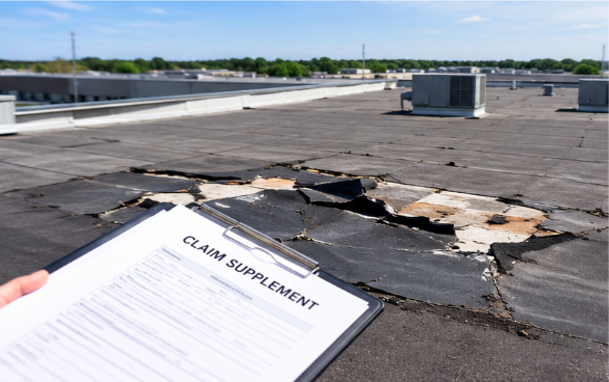
Fixing a big commercial roof after a storm is no walk in the park. Most general contractors quickly learn that the insurance adjuster’s first offer is a drop in the bucket. It barely covers basic materials, let alone the full job. That is why commercial roofing damage claim supplements are key to keeping your project in the black. Still, carriers love to dig in their heels and fight those extra costs. We know how frustrating it is when adjusters put up a brick wall. Let us walk through how you can knock down that pushback and get every dollar you deserve.
Adjusters process stacks of files every single day. They run on tight deadlines and rely on cookie-cutter software settings. Because they rush through inspections, they often miss major structural issues. They look at the surface and call it a day.
When you ask for more money, carriers usually claim you are padding the bill. They might say hidden deck damage or insulation layers were not proven. They also hate paying for regional labor rates or local code updates. Knowing these excuses helps you nip them in the pill in advance.
Insurance companies do not like surprises that cost them extra cash. When you send in extra costs, their first knee-jerk reaction is to say no. They hope you will throw in the towel and accept a lower payout.
Most rejections happen because the adjuster missed key items during their quick walk-through. If you lack clear pictures or code proof, they will happily toss your request in the trash. Knowing their game plan helps you stay one step ahead.
Winning this battle is not about screaming or throwing a fit. It comes down to bringing receipts and laying out cold hard facts. When you back up your claims with rock-solid proof, adjusters run out of wiggle room.
Using smart tricks turns the tables on stubborn carriers. Showing photo proof, local code rules, and sub bids forces them to pay up. Here is how simple changes in your strategy can completely change the game for your business.
| Challenge Faced | Traditional Approach | Winning Strategy |
|---|---|---|
| Missing Deck Damage | Sending a text description | Clear photos with moisture readings |
| Omitted Code Upgrades | Requesting extra budget verbally | Citing specific municipal building code numbers |
| Disputed Labor Costs | Asking for standard rate hikes | Submitting local subcontractor bids and invoices |
| Rejected Line Items | Resending the same file | Providing manufacturer installation guidelines |
You cannot win an argument with an adjuster using basic word-of-mouth descriptions. You need visual proof that leaves no room for doubt. Take crystal clear photos of every single roof layer during the tear-off phase.
Do core tests to prove that wet insulation is hiding under the top membrane. Write down exact measurements, slope angles, and material waste numbers in your logs. Keeping a tight paper trail ensures the adjuster cannot claim you are making things up.
Carriers often reject extra items by calling them unnecessary bells and whistles. However, if your local town laws demand those fixes, the insurer must step up to the plate. Contact the city building department before you drive a single nail.
Get written rules on local insulation thickness and wind uplift mandates. Attach those official city papers directly to your commercial roofing damage claim supplements paperwork. When city law demands the fix, the insurance carrier cannot easily brush it off.
Adjusters love standardized software like Xactimate. If your paperwork looks like a messy scribble, it goes straight to the bottom of the pile. Break down every task into clear individual line items so they see where every cent goes.
Show manufacturer instructions to prove why specific parts and extra steps are necessary. Use true local pricing maps instead of outdated national averages. Adding safety gear required by strict labor laws also keeps your estimate air-tight.
Partnering with a savvy team makes a world of difference when you are going toe-to-toe with insurance carriers. If you want to cut through red tape, boost your approval rate, and get an accurate roofing supplement estimate, get in touch with us at CTT Claims today.
What is a commercial roof claim supplement?
A claim supplement is a formal request sent to an insurance carrier for extra money, labor, or materials omitted from the adjuster’s original scope. It ensures you have enough funds to finish the restoration work correctly.
Why do insurance carriers deny claim supplements?
Carriers deny supplements due to missing photo proof, lack of building code notes, bad formatting, or no proof that the storm caused the extra damage. Providing clear evidence prevents these common rejections.
Who prepares the supplemental estimate for a commercial roof?
General contractors, public adjusters, or third-party claim experts write these detailed papers. They use industry software so all labor, structural items, and materials are completely accounted for from start to finish.
How long does an insurance carrier have to respond to a supplement?
Response times depend on state rules and contract fine print. Usually, carriers take two to four weeks to review your paperwork once you hand over all supporting photos and site documents.
Can a carrier refuse to cover mandatory building code upgrades?
Insurers must pay for legally required code updates if the policy includes ordinance coverage. Contractors must show official notes from local city officials proving the upgrade is mandatory for the job.